


Specialty coffee often overwhelms beginners. Espresso machines look technical and expensive. Capsule systems reduce choice to convenience. Guides are written in language that feels distant from everyday brewing. The effect is confusion about where to begin.
The best first step is pourover.
What pourover coffee is
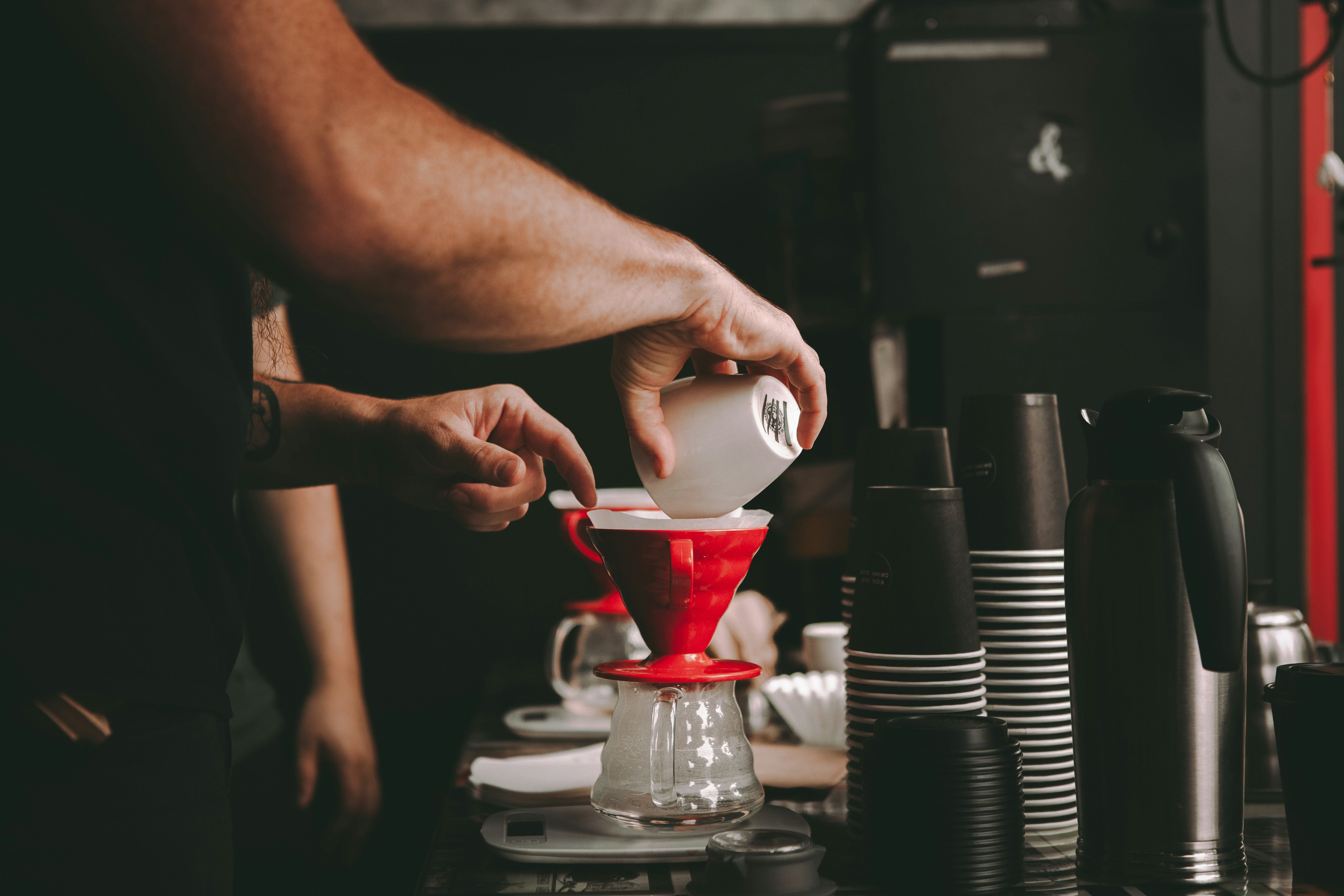
Pourover is a brewing method where you place ground coffee in a filter and pour hot water over it by hand. The water passes through the grounds and the filter, then drips into a carafe or cup below. That is all there is to it.
There are different drippers on the market, like the Hario V60, Kalita Wave, or Chemex, but the principle is the same. You measure coffee, add water slowly, and let gravity do the work.
Because you handle each step, you control how the coffee tastes. That makes pourover one of the simplest and clearest ways to learn how coffee works.
Why pourover helps beginners learn
Coffee brewing is a chain of cause and effect. Pourover highlights this clearly.
Grind finer and strength increases.
Raise water temperature and acidity shifts.
Pour slowly and clarity improves.
Each change produces a result you can taste. Over time, patterns appear. This makes it easier to understand extraction and balance.
Confidence through control
Starting out, many people hesitate. They worry about wasting coffee or doing something wrong. Pourover lowers this barrier because the equipment is simple and affordable.
A dripper, a scale, paper filters, and a kettle are all you need. Each brew is an experiment. Adjust one element, taste, and learn. The repetition builds confidence. With practice, you stop second-guessing and begin to trust your palate.
Why pourover teaches better than other methods
Pourover requires attention. That attention is valuable. By handling each step yourself, you learn faster and retain more. Espresso involves complex equipment. Capsule systems automate decisions. Automatic brewers remove control. Pourover keeps you in charge.
Because you stay involved, you notice details you might otherwise miss. Once you learn how grind size, water temperature, and pouring rhythm interact, you can apply that knowledge to espresso, immersion, or batch brewing. The fundamentals stay the same.

Tools needed to begin
Getting started does not require much:
A dripper such as a V60 or Kalita.
Paper filters.
A grinder for fresh coffee.
A scale.
A kettle with a steady pour.
These are affordable compared to espresso machines or automatic brewers. They are also easier to set up, which lowers the barrier for someone new to brewing at home.
Pourover beyond the first step
Pourover continues to matter even once you move past the beginner stage. It sharpens skills because it keeps you involved in the details. You can test new coffees, change grind sizes, or experiment with different pouring patterns and see the results directly.
For this reason, pourover is both a starting point and a long-term practice. It grounds you in the fundamentals while staying relevant as your knowledge grows.
The Home Barista Show
This belief in pourover as the foundation for learning is why the next Home Barista Show will focus on it. The Home Barista Show is designed for people who brew at home, not only for the industry.
The first edition took place in Dubai earlier this year. Visitors walked through equipment, listened to talks from fellow home brewers, and gained clarity about how to brew better coffee. The next edition will be held in Sharjah at Archers Coffee Roastery. Sharjah’s coffee community is growing fast, and Archers is one of the strongest roasters in the UAE.
Pourover will be at the center of this event because it gives beginners the clearest way to start their journey into specialty coffee.
A foundation for specialty coffee
Specialty coffee will grow when people feel confident making it at home. Confidence comes from understanding how choices shape taste. Pourover is the method that reveals those links most clearly.
Every journey into specialty coffee starts with a first step. Pourover is the step that makes the most sense. It is affordable. It is simple. It teaches you more than any other method about how coffee works. It builds confidence early and keeps rewarding you as your knowledge grows.
FAQ
Do I need expensive gear to start with pourover?
No. A dripper, filters, a simple scale, and a kettle are enough.
Is pourover too hard for beginners?
No. The steps are simple and repetition helps you learn quickly.
Why start with pourover instead of espresso?
Espresso requires costly equipment and makes it harder to see cause and effect. Pourover shows you how changes impact taste more directly.
How much time does a pourover take?
Three to four minutes. That time is what helps you notice details and learn.
Will pourover still be useful once I gain experience?
Yes. It remains one of the best ways to test new coffees and refine skills.